Driving Office Property Value Through Parking in Denver’s CBD
August 28, 2026
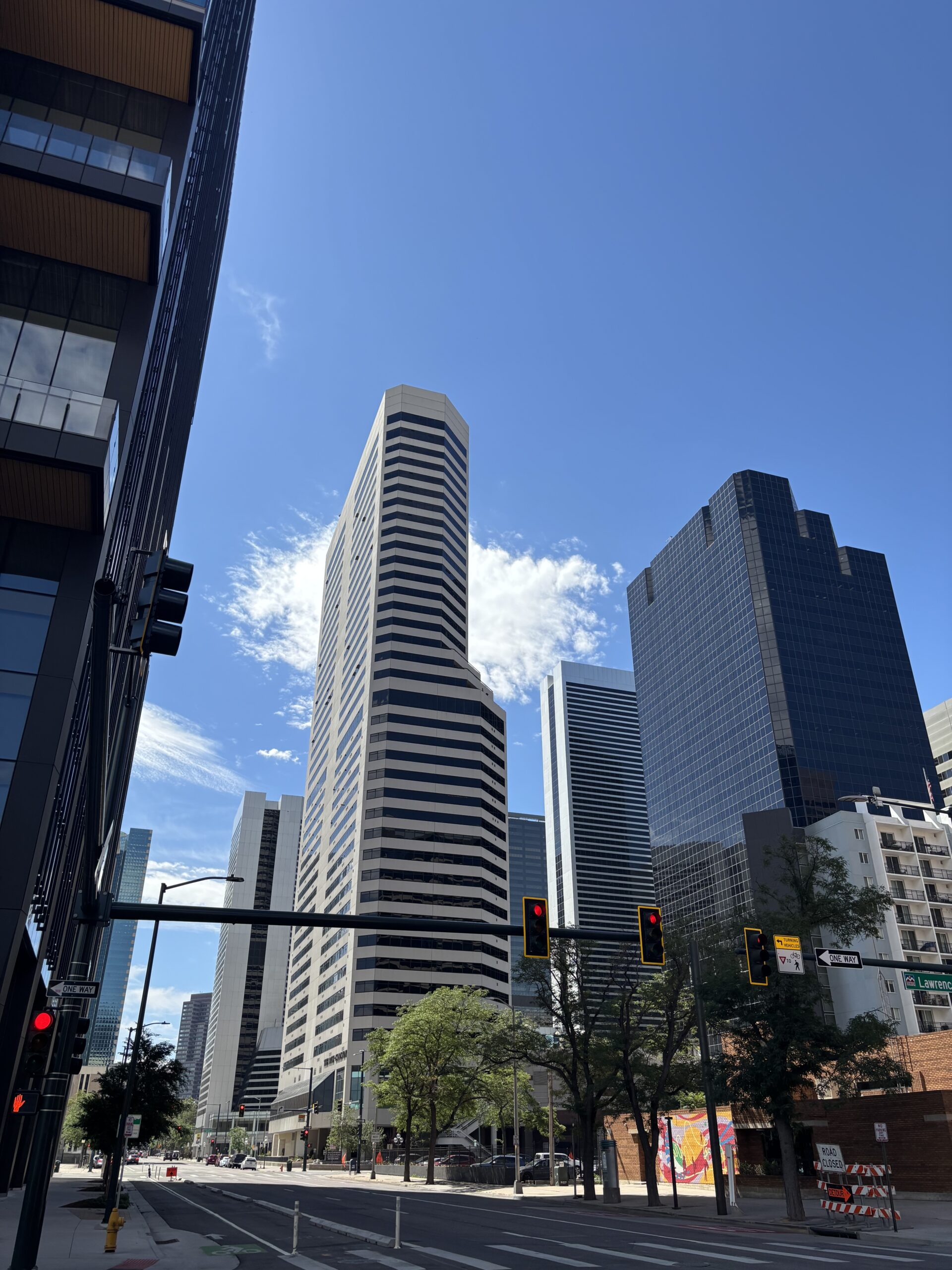
For an office owner on Denver’s 17th Street corridor, the spine of the Central Business District, parking is one of the few line items on the property that can be repriced, reallocated, and remarketed without capital, without construction, and without waiting for a lease to roll. It is also one of the most consistently under-managed.
This summer our team walked the corridor and surveyed rates at Class A office garages on and adjacent to 17th Street. The survey points to a consistent conclusion for ownership: the monthly rate card is largely set by the market, weekday capacity is effectively fixed by tenant demand, and the recoverable value sits in how the inventory is billed and in the hours the office is not using it.
Every dollar of parking net operating income recovered is capitalized into the value of the building. The sections below set out where that income is in this submarket, and how to capture it without disrupting the tenant experience that supports your rent roll.
The Market has already set your monthly rate
Unreserved monthly rates for office tenants average $223.33 and sit within a $15 band across the facilities surveyed. Reserved rates average $281.67 and range across $50. Unreserved parking is effectively a market rate; reserved parking is a product owners still price on their own terms. Non-tenant monthly parking, where it is offered, is priced above the tenant rate.
| MONTHLY PRODUCT | AVERAGE | RANGE |
|---|---|---|
| Tenant unreserved | $223.33 | $215.00 – $230.00 |
| Tenant reserved | $281.67 | $250.00 – $300.00 |
| Non-tenant unreserved | $228.33 | $225.00 – $230.00 |
| Premium reserved | $312.50 | $300.00 – $325.00 |
Unweighted averages of the surveyed facilities publishing each product. Not every garage offers non-tenant monthly or premium reserved parking.
Your transient rate card was built for the commuter
The district’s transient curve rises steeply through two hours, then flattens. Between roughly two and twelve hours the average rate barely moves. The next real step is the daily maximum. Evening and weekend flat rates, applied to the same inventory, average about a fifth of that daily maximum.
| TRANSIENT PRODUCT | AVERAGE | RANGE |
|---|---|---|
| 1 hour | $11.33 | $6.00 – $16.00 |
| 2 hours | $17.67 | $8.00 – $22.00 |
| 3 to 12 hours | $20.17 | $8.00 – $24.00 |
| Daily maximum | $34.67 | $28.00 – $40.00 |
| Early bird | $14.33 | $12.00 – $16.00 |
| Evening flat rate | $7.40 | $5.00 – $10.00 |
| Weekend flat rate | $7.50 | $5.00 – $10.00 |
Weekday capacity, not rate, is your binding constraint
Parking ratios across the district generally align with one space per 1,000 rentable square feet, and the garages reviewed are already well occupied. Tenant leases have first priority on this inventory through allocated spaces, must-take commitments, and validation programs, leaving limited capacity for transient parkers.
This makes rate optimization and occupancy growth two very different strategies in this submarket. Increasing weekday transient volume can come at the expense of tenant demand or push utilization beyond a level that supports a positive customer experience. For a facility of this size, we view 90%–95% weekday utilization as the optimal operating range. Below that, there may be an opportunity to capture additional demand; above it, service levels can deteriorate and parking can become a source of friction for tenants and visitors.
The takeaway is simple: weekday capacity is largely fixed, so the opportunity lies in optimizing the revenue generated from that capacity. This means ensuring rates reflect the market, contracted spaces are fully billed, and unused inventory is effectively monetized during evenings, weekends, and events.
Three paths to higher parking NOI
For office garages in Denver’s CBD, maximizing value starts with consistently managing the monthly parker base. Monthly parking is typically the garage’s largest and most stable revenue stream, yet rates can easily fall behind the market. Operators should regularly benchmark rates against submarket comparables and adjust pricing accordingly. Non-tenant monthly parkers should also be priced at a premium, given they have no lease commitment while using the same limited weekday capacity.
Lease compliance presents another often-overlooked opportunity. Many office leases include must-take parking commitments, requiring tenants to pay for a set number of spaces regardless of actual usage, often at contracted rates that increase over time. Regularly reconciling parking billings against lease terms can help ensure owners are collecting the full amount contractually owed, recovering revenue that tenants have already agreed to pay.
Finally, weekend and event demand can help monetize otherwise underutilized inventory. Office garages can leverage online parking platforms, dynamic pricing, and targeted promotions around Colorado Rockies games and other downtown events to capture incremental demand and turn excess weekend capacity into additional revenue.
Because inventory, lease structures, and tenant mix vary by asset, the best way to illustrate these opportunities is on a per-space basis. The examples below use 100 spaces as a common benchmark and are based on high-level assumptions for illustrative purposes only.
The three scenarios highlight different ways to create value: Scenario A increases rates for existing monthly parkers, Scenario B monetizes otherwise unused weekend capacity, and Scenario C captures revenue already guaranteed under existing lease agreements.
Keep monthly rates current
100 monthly spaces
$10.00
Every dollar per space compounds across the whole monthly base, which is why the rate needs monitoring rather than an annual glance. It touches tenant relationships directly and adds no capacity, so it has to be defensible against the submarket on the day it is issued.
Sell the weekend online
100 open spaces
15%
$5.00
103
Sells hours the office is not using. Because tenant demand in this district is concentrated on weekdays, weekend capacity is the inventory an owner is most free to test with: no weekday capacity is consumed, no tenant rate changes, and no capital is required.
Bill the contract as written
100 contracted spaces
3 of 100
$250.00
No rate change and no new demand. Must-take agreements obligate payment for a fixed space count regardless of use, and billings drift toward actual utilization instead. Recovering it is a reconciliation, not a negotiation.
Where all three apply, the paths above total $28,725 of incremental annual net operating income per 100 spaces. Capitalized at a 7.00% cap rate, that is roughly the implied value shown, added to the property without capital expenditure.
Illustrative only, stated per 100 spaces so it can be scaled to any asset. Figures use district survey averages; actual results depend on inventory, lease terms, occupancy, and the event calendar.
Protecting tenant flow while capturing the upside
Before adding off-peak volume, owners should ensure the garage has the operational controls needed to protect the weekday tenant experience:
- Verified occupancy. Use reliable occupancy counts to manage the garage within the optimal 90%–95% weekday range.
- Working access control. Ensure gates, cameras, and payment systems are functioning properly to prevent revenue leakage and maintain predictable traffic flow.
- On-site accountability. Establish clear responsibility for exit assistance, validations, and periodic audits against lease terms.
With these fundamentals in place, owners can confidently monetize underutilized capacity without compromising the weekday experience for tenants.
Parking Advisors’ recommendations
- Benchmark monthly and transient rates against the market and adjust as needed.
- Manage weekday occupancy to a 90%–95% range using verified counts.
- Reconcile tenant billings and parking commitments against lease terms.
- Optimize reserved, unreserved, and transient inventory to maximize revenue per space.
- Develop a targeted evening, weekend, and event parking strategy.
- Confirm access control and revenue capture are functioning before adding volume.
To learn more about our services, visit parkingadv.com/services.